
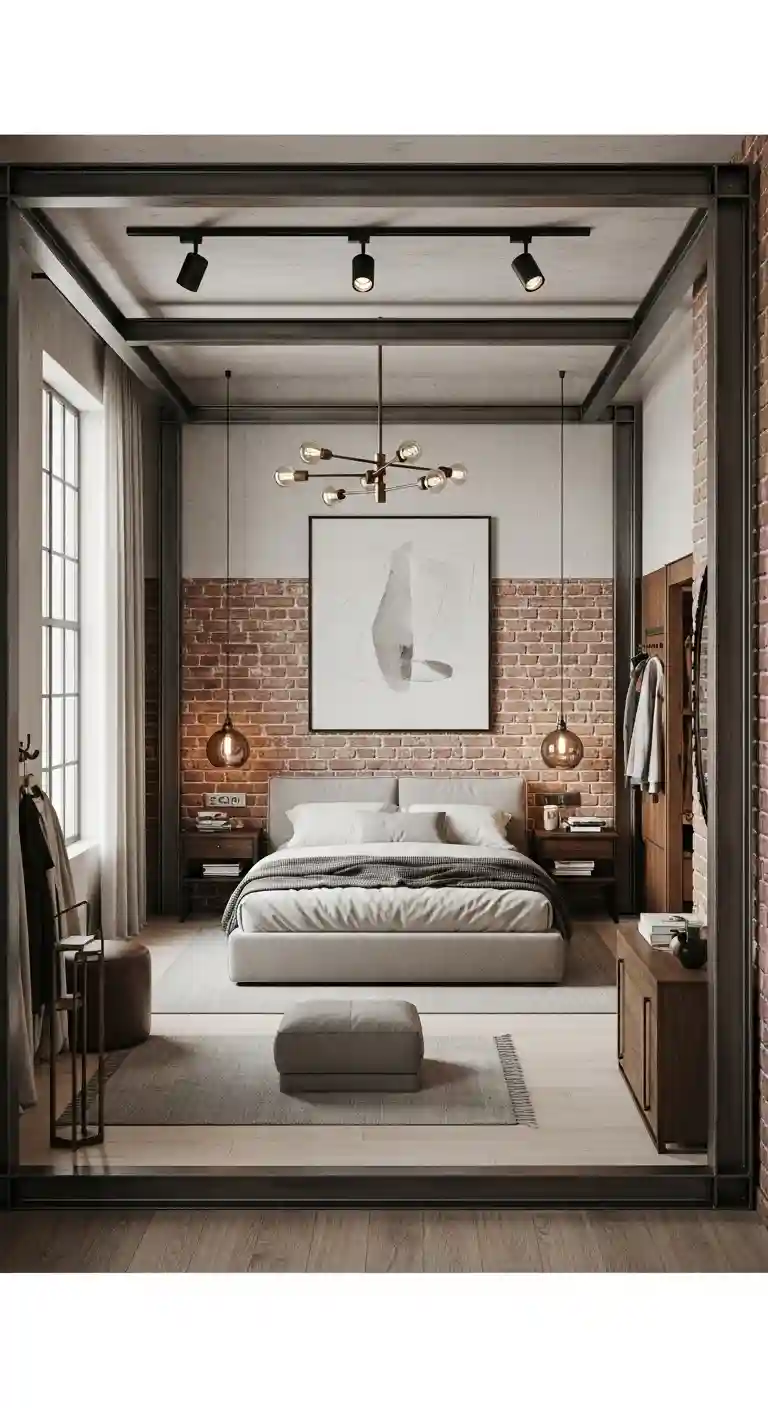
Bedroom Floor Plans Smart Layout Ideas for Every Home
Your bedroom isn’t just a place to rest; it’s where comfort meets creativity and design meets purpose.
A thoughtful floor plan can completely transform how a room feels and functions.
The right layout allows light to flow naturally, encourages better movement, and creates a sense of calm.
When you plan your bedroom layout carefully, every inch starts working for you rather than against you.
Whether you dream of a cozy nook or a grand suite, there’s a layout that fits your space and your personality.
In this guide, we’ll explore 21 bedroom floor plans ideas that mix style, comfort, and functionality.
You’ll also learn how to pick the best layout for your lifestyle and how subtle design choices can reshape the way your room feels.
So, let’s start reimagining your space one floor plan at a time.
Contents
- Bedroom Floor Plans Explained: How to Design Your Space Right
- 21 Bedroom Floor Plans Ideas
- 1. Open Concept Bedroom Floor Plan
- 2. Cozy Corner Layout
- 3. Master Suite Retreat
- 4. Small Bedroom Smart Layout
- 5. Guest Bedroom Comfort Plan
- 6. Kids’ Shared Bedroom Floor Plan
- 7. Minimalist Bedroom Layout
- 8. Rustic Cabin-Style Floor Plan
- 9. Modern Loft Bedroom Layout
- 10. L-Shaped Bedroom Floor Plan
- 11. Studio Apartment Bedroom Plan
- 12. Ensuite Bathroom Integration
- 13. Scandinavian-Inspired Floor Plan
- 14. Traditional Bedroom Layout
- 15. Industrial Bedroom Floor Plan
- 16. Long and Narrow Bedroom Plan
- 17. Boho-Chic Bedroom Layout
- 18. Luxurious Hotel-Style Bedroom Plan
- 19. Bedroom with Balcony Extension
- 20. Split-Level Bedroom Floor Plan
- 21. Multi-Functional Bedroom Office Plan
- Design Flow and Space Psychology
- Practical Tips for Planning Your Bedroom Layout
- Lighting and Furniture Placement Insights
- FAQs
- Final Wrap-Up
Bedroom Floor Plans Explained: How to Design Your Space Right
A bedroom floor plan is a visual map of your space — showing how furniture, walls, doors, and windows are arranged.
It’s not just about looks; it’s about balance, comfort, and flow.
A well-planned room ensures your bed doesn’t block light or doorways, while maintaining a cozy, private atmosphere.
Key Considerations Before Planning
Goal: Create a floor plan that feels natural, functional, and personal — not just stylish.
How to Choose the Right Bedroom Floor Plan
Selecting the right floor plan starts with understanding how you use your bedroom.
Steps to Choose Wisely:
Tip: Avoid pushing all furniture against walls. A little negative space can make a small room feel larger and more intentional.
Comparison Table: Bedroom Layouts at a Glance
| Layout Type | Ideal For | Key Features | Best Room Size |
|---|---|---|---|
| Open Concept | Loft or master suite | Airy, minimal walls | Large |
| Cozy Corner | Small bedrooms | Bed in corner, warm lighting | Compact |
| Master Suite Retreat | Luxury design | Ensuite + walk-in closet | Spacious |
| Small Smart Layout | Apartments | Vertical storage, mirrors | Small |
| Kids’ Shared Room | Siblings | Twin beds, cubbies | Medium |
21 Bedroom Floor Plans Ideas
1. Open Concept Bedroom Floor Plan
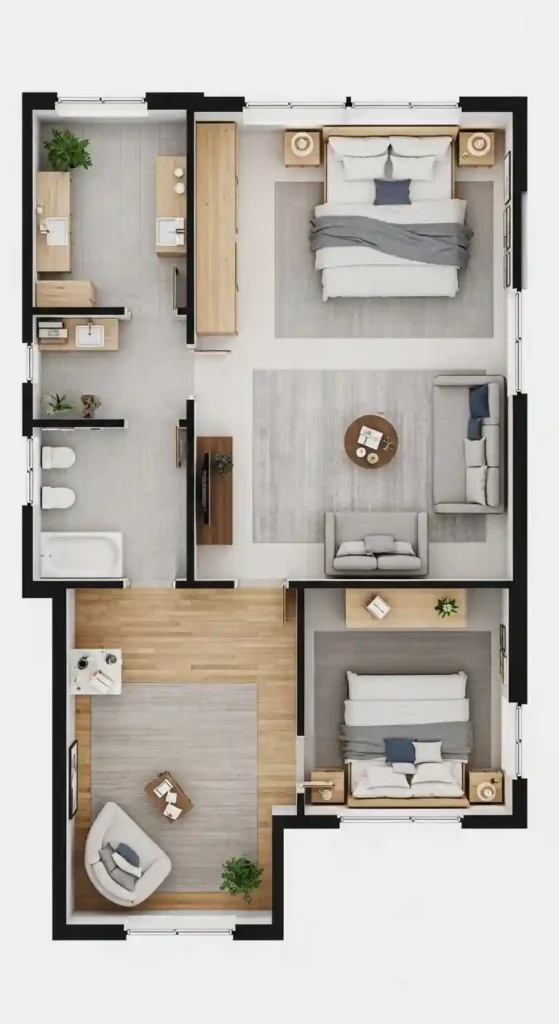
An open concept bedroom layout removes unnecessary walls and partitions to create a seamless flow.
It’s perfect for spacious master suites or loft-style homes where light and movement are priorities.
This floor plan allows you to place furniture strategically, giving the illusion of more space.
A large rug or partial divider can subtly define sleeping and lounging zones without blocking sightlines.
If you love airy designs and natural light, an open concept floor plan offers both freedom and sophistication.
It blends functionality and style effortlessly while maintaining an inviting, uncluttered atmosphere.
2. Cozy Corner Layout
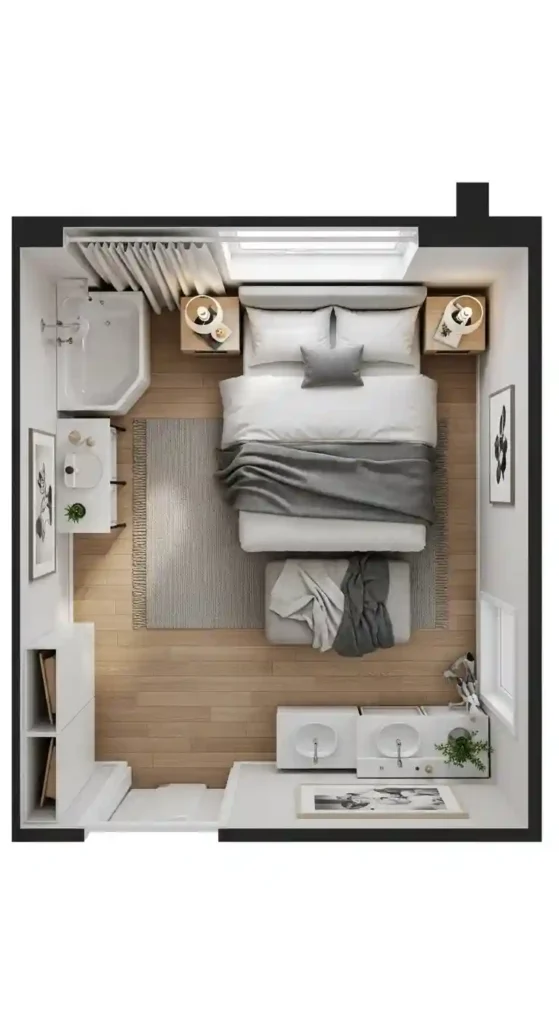
A cozy corner layout is ideal for smaller bedrooms that crave warmth and intimacy.
By positioning the bed in a corner, you instantly open up the center of the room for movement.
This setup provides a sense of enclosure while still keeping the layout simple and efficient.
You can use floating shelves or corner lamps to enhance symmetry and balance.
Soft textiles and layered lighting help transform a tight corner into a personal sanctuary.
This design works beautifully in apartments, dorms, or guest rooms where space efficiency matters most.
3. Master Suite Retreat
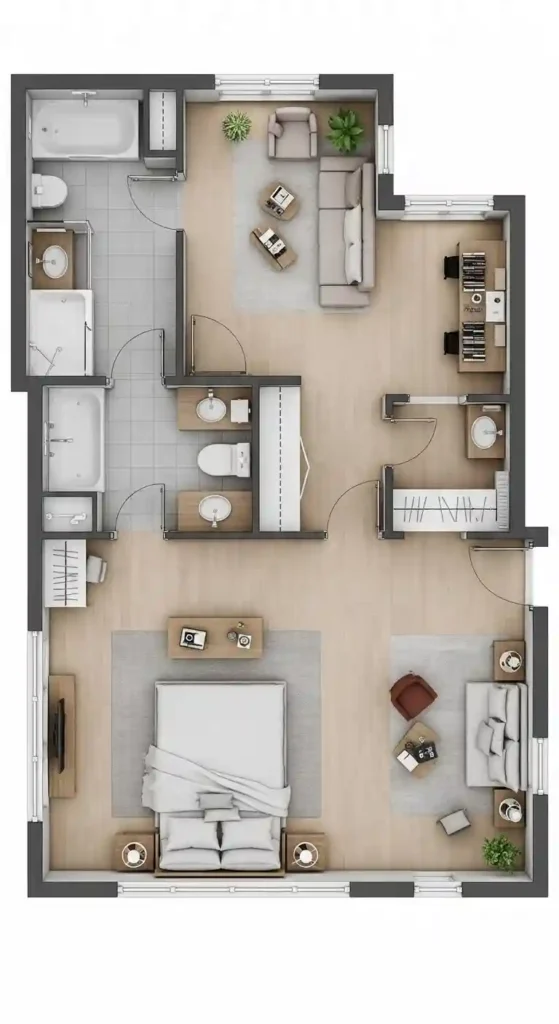
The master suite retreat layout focuses on luxury, comfort, and privacy.
It typically includes an en-suite bathroom, a walk-in closet, and a designated seating or dressing area.
This floor plan feels like a private oasis within your home, promoting relaxation and indulgence.
Position the bed centrally with balanced side tables and easy access to natural light.
Add a reading nook near a window to enhance the flow of comfort throughout the suite.
A master suite retreat layout creates an elegant, hotel-like atmosphere that’s hard to leave.
4. Small Bedroom Smart Layout
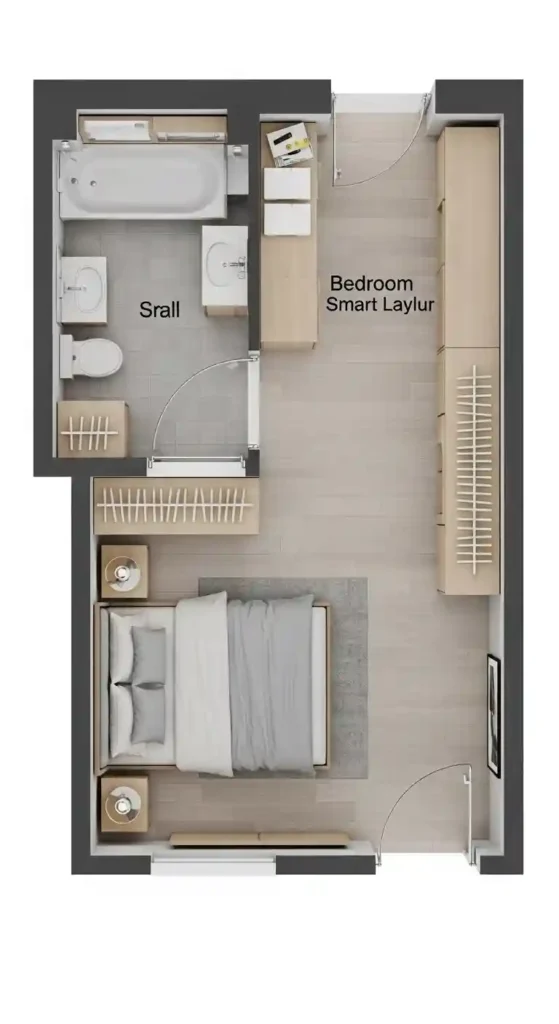
Small bedrooms demand clever planning and efficient design.
A smart layout prioritizes vertical storage, multi-functional furniture, and light colors to create spaciousness.
Place your bed against the longest wall to maximize walking space and visual balance.
Floating shelves or wall-mounted lights save floor space while keeping the room stylish and functional.
Mirrors strategically positioned opposite windows can make the room appear twice its size.
This bedroom floor plan proves that limited space doesn’t mean limited comfort or creativity.
5. Guest Bedroom Comfort Plan
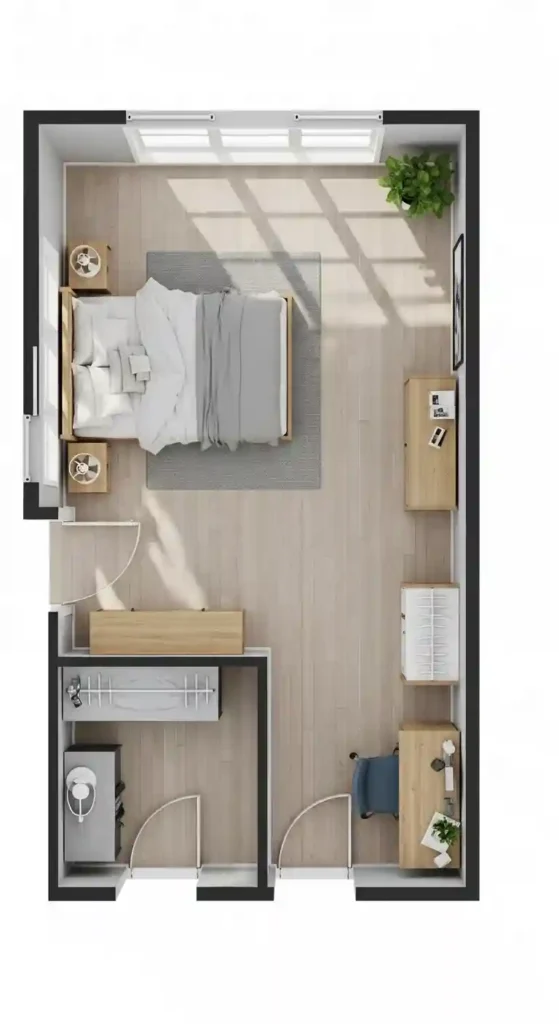
A guest bedroom should feel like a home away from home for your visitors.
This layout emphasizes comfort, accessibility, and privacy.
Place the bed away from the door but near a window for natural light and ventilation.
Add a small dresser or storage bench for convenience and a welcoming touch.
If space allows, include a small desk or chair for added functionality.
A well-planned guest room layout ensures your visitors enjoy both relaxation and independence during their stay.
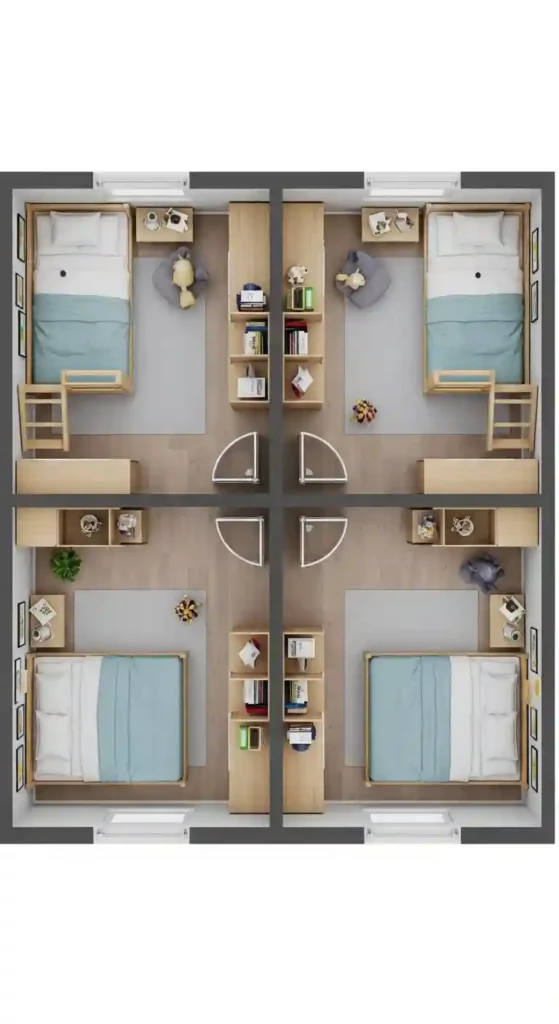
Designing a shared kids’ bedroom is all about creating balance and personal zones.
Use bunk beds or twin beds placed opposite each other to define individual spaces.
Incorporate open shelving or cubbies in between to encourage organization and easy access to toys or books.
This type of floor plan encourages cooperation while maintaining a sense of independence for each child.
Choose cheerful colors and adaptable furniture that can grow with their needs.
The goal is to keep the space playful yet functional without feeling chaotic.
7. Minimalist Bedroom Layout
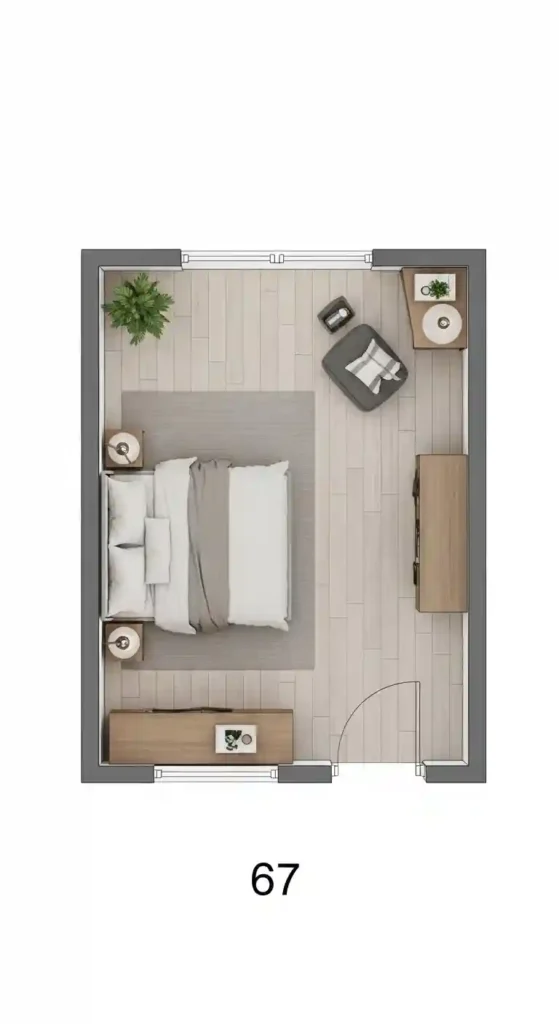
A minimalist bedroom floor plan centers on simplicity, order, and calmness.
Every element should have a purpose, from the bed to the nightstand.
Start with a low-profile bed placed symmetrically in the center of the longest wall.
Add only the essentials—a small dresser, reading lamp, and minimal decor.
Neutral tones and natural textures enhance the peaceful, uncluttered feel.
This layout creates a sanctuary-like space where rest and clarity take priority over visual noise.
8. Rustic Cabin-Style Floor Plan
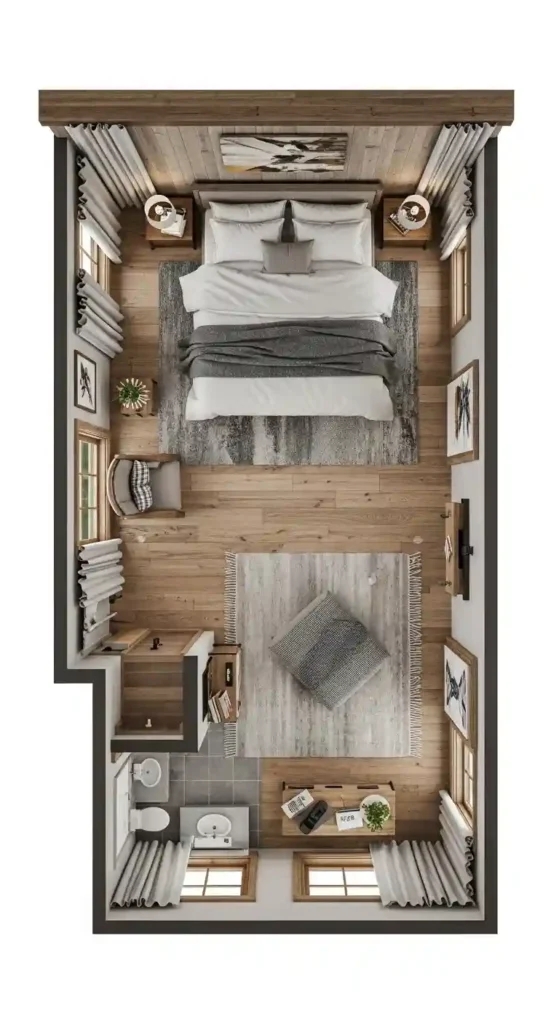
A rustic cabin-style layout brings a warm, nature-inspired vibe to your bedroom.
Think exposed beams, natural wood finishes, and soft, cozy lighting.
Place the bed against a feature wall with wood paneling or stone texture to create a strong focal point.
Use layered textiles and soft rugs to enhance the organic, lived-in feel.
Add a small reading chair near a window to complete the cabin aesthetic.
This floor plan celebrates comfort, charm, and the beauty of natural materials.
9. Modern Loft Bedroom Layout
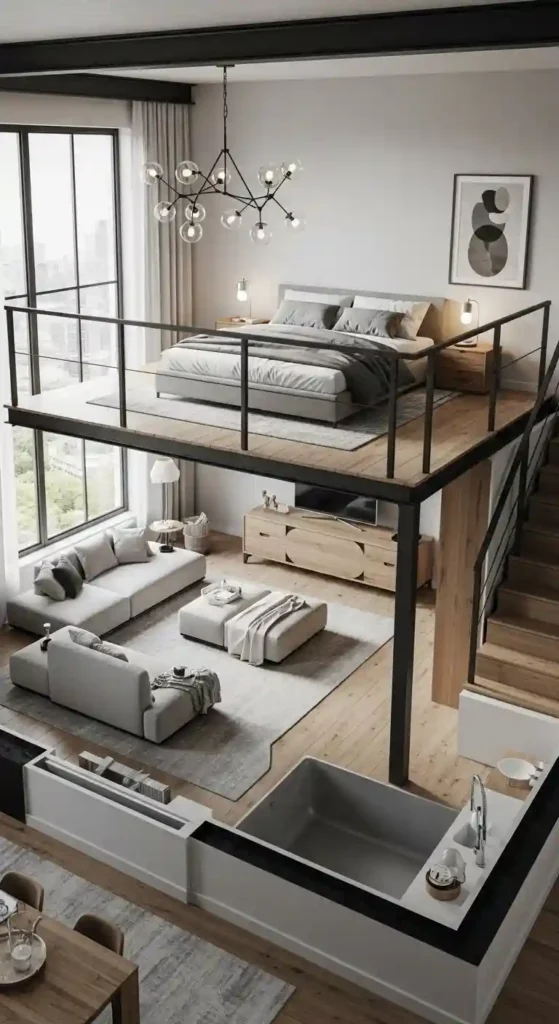
A modern loft bedroom layout emphasizes open space, height, and creativity.
By raising the bed platform or integrating mezzanine storage, you make the most of vertical space.
Large windows and exposed structures like beams or metal rails create an urban, airy feeling.
Keep the color palette neutral with soft grays, whites, and warm woods for a modern yet cozy mood.
Add modular furniture that can shift between seating and storage.
This type of layout suits apartments and compact homes that crave both sophistication and flexibility.
10. L-Shaped Bedroom Floor Plan
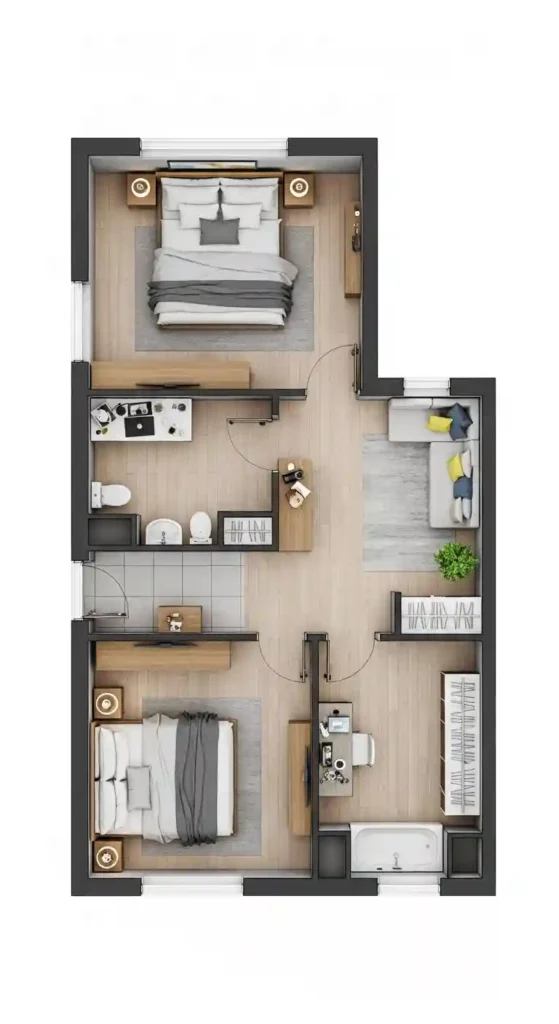
An L-shaped bedroom layout works beautifully when you want to separate functional zones.
Use one side of the “L” for sleeping and the other for a seating nook, workspace, or dressing area.
This configuration helps visually divide the room without adding walls or partitions.
It’s especially useful in large bedrooms that might otherwise feel too open.
Position lighting strategically to highlight each section’s purpose and create depth.
An L-shaped layout adds dimension and flow, making the room both practical and stylish.
11. Studio Apartment Bedroom Plan
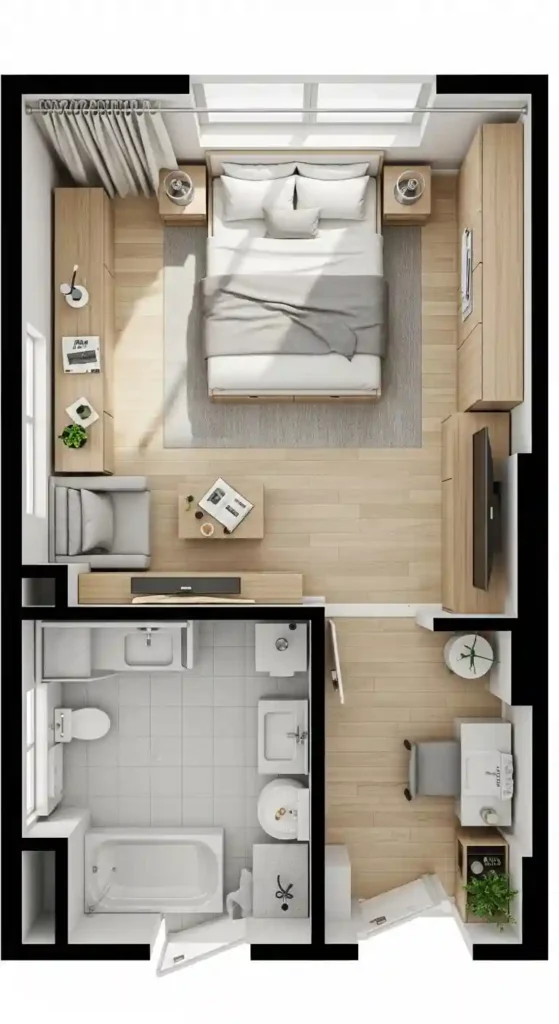
When living in a studio, your bedroom floor plan must merge sleeping and living zones harmoniously.
Use an open shelving unit, curtain, or folding screen to define your bedroom area subtly.
Keep furniture lightweight and mobile to adapt to changing needs.
Choose a platform bed with built-in drawers to save space while maintaining comfort.
Mirrors and layered lighting expand the sense of openness.
A well-designed studio layout keeps your space feeling unified yet distinct—perfect for small urban living.
12. Ensuite Bathroom Integration
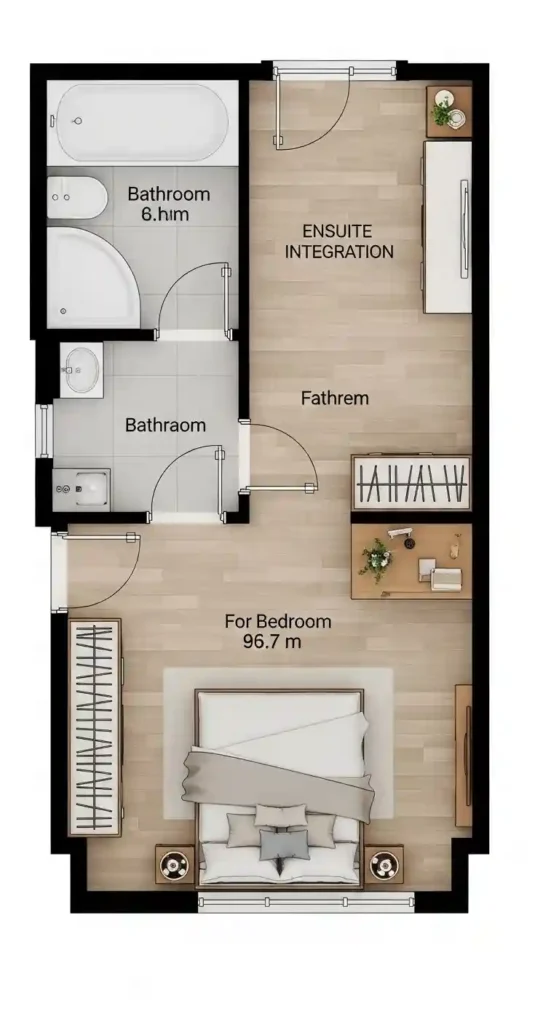
A bedroom with an ensuite bathroom requires thoughtful layout planning for both privacy and accessibility.
Position the entrance away from the bed to maintain a calm sleeping atmosphere.
Use sliding or frosted glass doors for smooth transitions between areas.
Ensure that lighting and ventilation complement both spaces for comfort and hygiene.
Adding a small vanity near the bathroom enhances convenience and daily routines.
This type of floor plan blends functionality with elegance while keeping your bedroom serene and uncluttered.
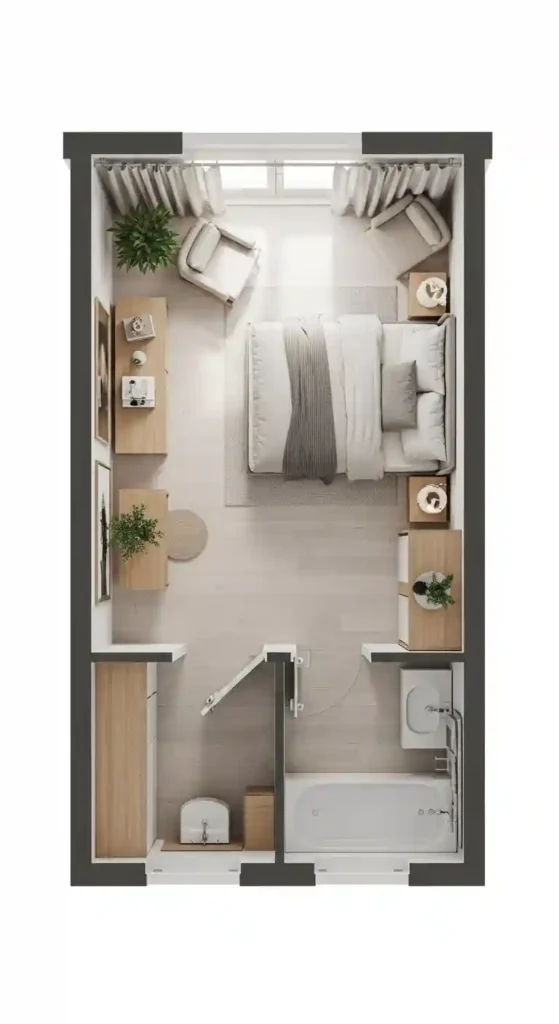
Scandinavian-inspired bedroom layouts celebrate simplicity, light, and balance.
Natural materials, minimal furniture, and soft neutral tones dominate this design approach.
Position the bed near a window to capture daylight and maintain a visual connection to nature.
Use clean-lined furniture and add greenery for a refreshing touch.
Keep storage discreet, blending built-ins with the wall design.
This layout promotes calmness and comfort while embracing a minimalist, airy aesthetic.
14. Traditional Bedroom Layout
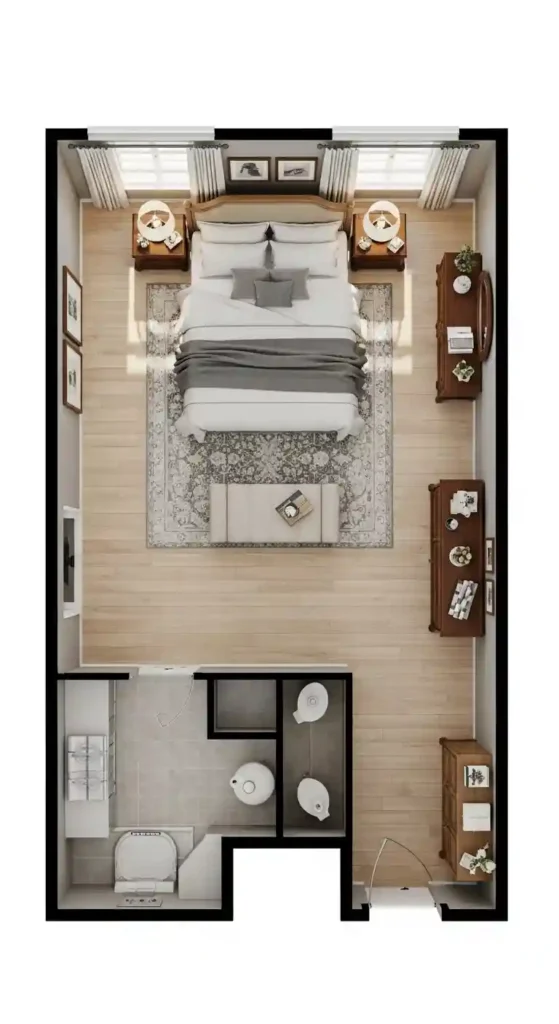
A traditional bedroom layout thrives on symmetry, balance, and timeless appeal.
Place the bed in the center of the main wall with identical nightstands and lamps on each side.
A dresser or console opposite the bed adds visual weight and practicality.
Incorporate classic furniture styles, warm tones, and rich textures.
This setup works perfectly for homeowners who love organized, elegant spaces with a sense of order.
A traditional layout never goes out of style—it simply evolves with your decor choices.
15. Industrial Bedroom Floor Plan
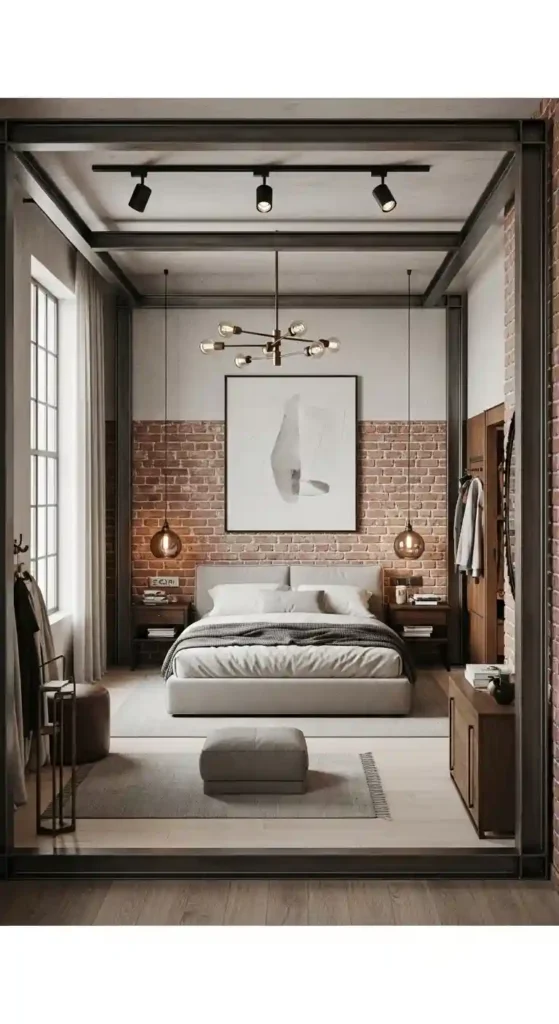
The industrial layout draws inspiration from urban lofts and warehouse conversions.
Exposed brick walls, metal frames, and open beams define this bold aesthetic.
Keep the bed low and minimal, balancing rugged textures with soft fabrics.
Add track lighting and statement fixtures to emphasize the architectural elements.
Use neutral colors with accents of black or bronze to enhance the industrial charm.
This layout captures a raw yet refined energy that’s both trendy and timeless.
16. Long and Narrow Bedroom Plan
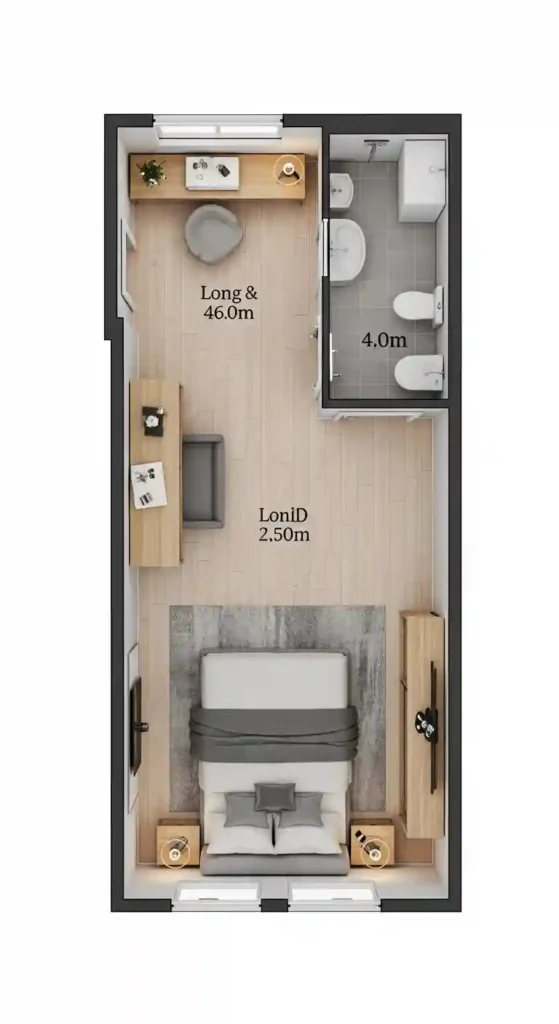
Long and narrow rooms can feel tricky, but smart planning turns them into cozy retreats.
Place the bed on the shorter wall to prevent a tunnel-like feeling.
Use vertical art or tall mirrors to draw the eye upward and expand perception.
Opt for slim furniture and floating shelves to maintain walking space.
Layer lighting with sconces and pendant lamps for depth and warmth.
This layout transforms awkward proportions into elegant design possibilities.
17. Boho-Chic Bedroom Layout
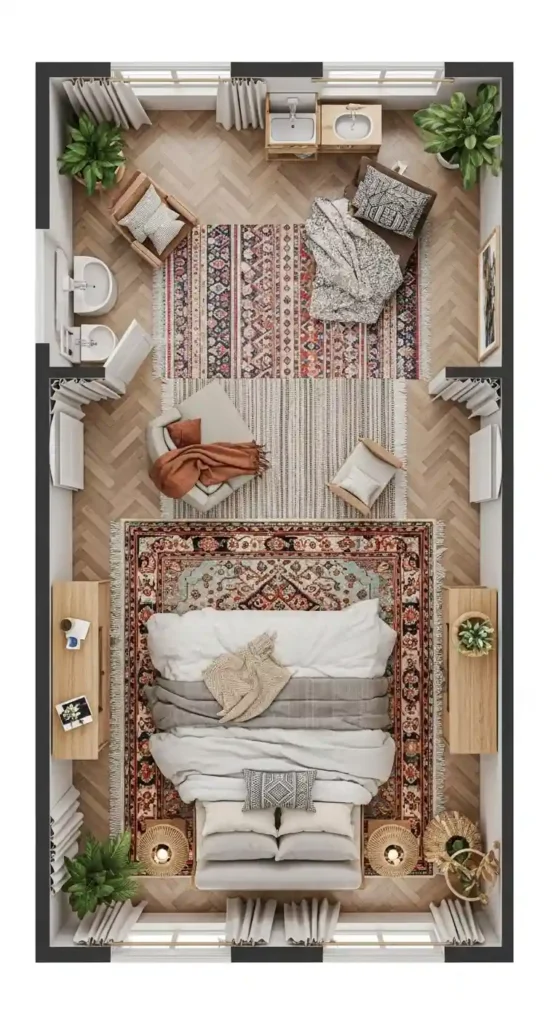
A boho-chic bedroom layout celebrates artistic freedom and individuality.
Mix patterns, textures, and earthy tones to create a lived-in, relaxed vibe.
Position the bed slightly off-center to make the space feel more organic and less structured.
Layer rugs, cushions, and throws for depth and character.
Use plants and woven decor to enhance natural warmth.
This type of layout suits free spirits who prefer creativity over convention in their personal retreat.
18. Luxurious Hotel-Style Bedroom Plan
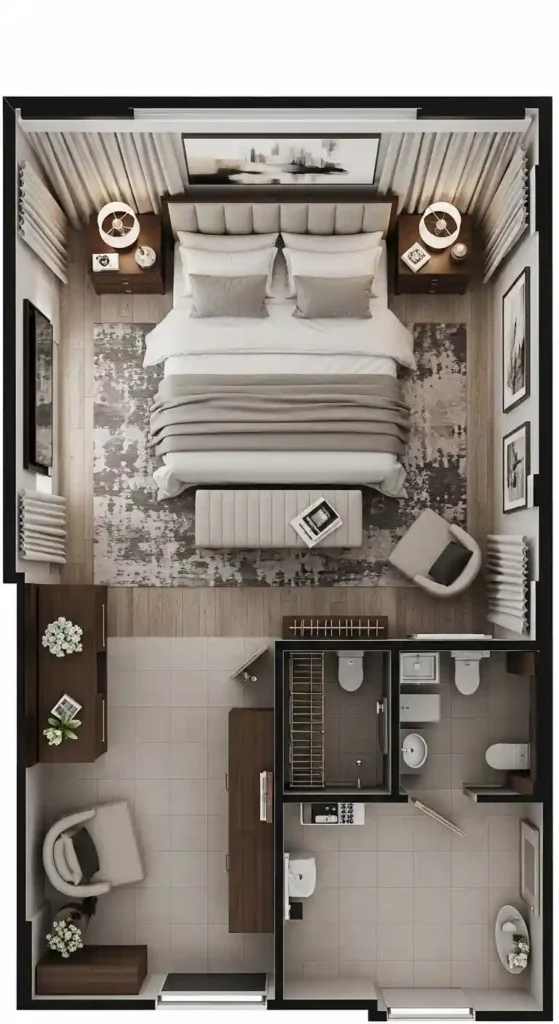
The hotel-style layout focuses on elegance, symmetry, and comfort.
Position the bed centrally with upholstered headboards and matching bedside lamps.
Add a bench or ottoman at the foot of the bed for a polished look.
Soft lighting, high-quality linens, and a statement rug elevate the ambiance instantly.
Keep pathways clear and ensure every piece feels intentional.
This layout transforms your bedroom into a sanctuary that feels like a high-end getaway.
19. Bedroom with Balcony Extension
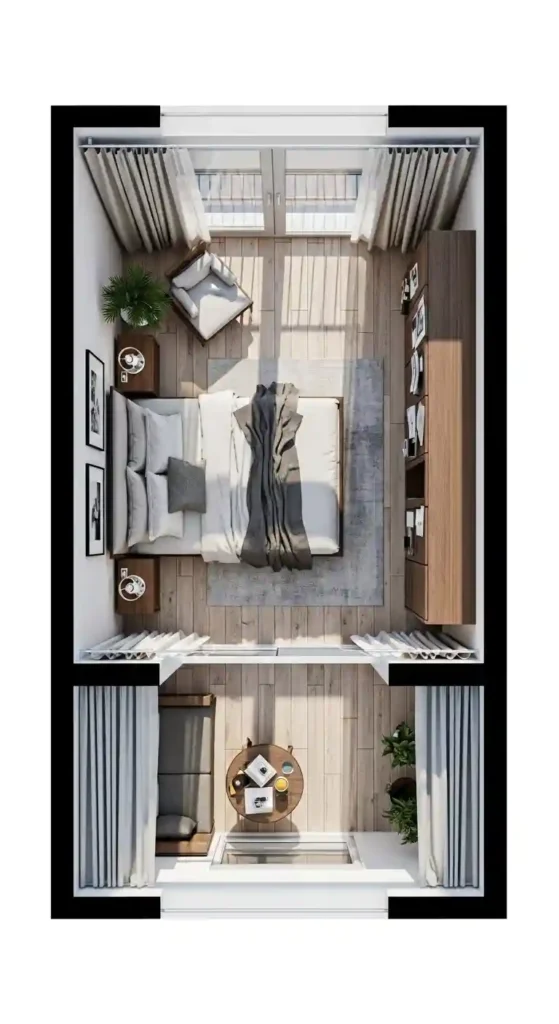
A bedroom connected to a balcony opens up endless design possibilities.
Position your bed to face the balcony doors, allowing natural light to stream in.
Use sheer curtains to filter sunlight and maintain privacy.
Add a small seating area near the door to bridge indoor and outdoor spaces.
Ensure flooring and color palettes flow smoothly between both zones.
This layout brings nature closer, offering peace and visual continuity throughout your space.
20. Split-Level Bedroom Floor Plan
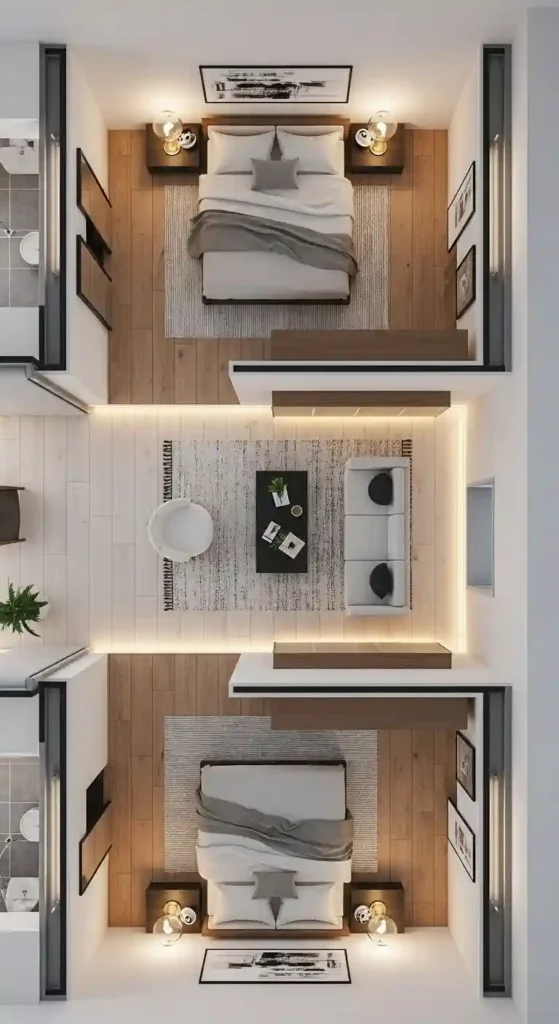
A split-level bedroom design introduces height variation and visual intrigue.
Use raised platforms to define sleeping or lounge zones without adding partitions.
This approach works beautifully in lofts or rooms with high ceilings.
Play with layered rugs or contrasting textures to emphasize each level’s function.
Add lighting at different heights for drama and warmth.
A split-level layout turns a simple bedroom into an architectural masterpiece that feels dynamic and sophisticated.
21. Multi-Functional Bedroom Office Plan
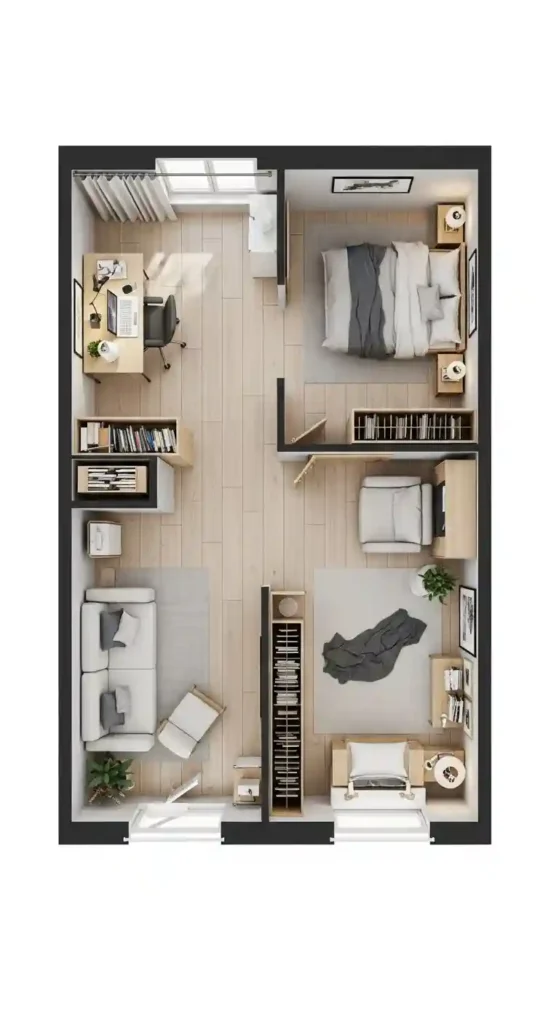
Modern living often demands a hybrid space that balances rest and productivity.
A multi-functional layout integrates a workspace without compromising comfort.
Place your desk near a window for natural light and clear boundaries between work and rest.
Use a screen or open shelving to divide zones subtly.
Keep furniture cohesive in color and texture for a unified aesthetic.
This layout supports both creativity and relaxation—ideal for remote workers or small home offices.
Design Flow and Space Psychology
The flow of your bedroom floor plan directly affects how you feel in the space.
A well-designed layout encourages calmness, better sleep, and improved energy.
Smooth circulation pathways make the room feel open and inviting.
Natural light, air movement, and symmetry influence emotional comfort.
Try to visualize your daily routine and move through the layout mentally.
When the flow feels effortless, the design naturally supports your well-being.
A balanced plan isn’t just beautiful—it’s restorative.
Practical Tips for Planning Your Bedroom Layout
Before finalizing your bedroom floor plan, take time to study how you naturally move within your space.
Start by sketching a simple outline that includes doors, windows, and built-in features like wardrobes or radiators.
Measure every wall accurately to prevent awkward furniture placement later.
Try to leave at least two to three feet of walking space around the bed for comfort.
Position the bed as the anchor point, then layer other furniture based on accessibility and symmetry.
Use lightweight or multi-purpose pieces to reduce clutter and maintain flexibility.
If possible, test your layout using online room design tools to visualize the proportions.
The best floor plans come from observing how your daily habits interact with your environment.
Function should guide form—when your space works naturally, comfort follows effortlessly.
Lighting and Furniture Placement Insights
Lighting plays a major role in shaping how your bedroom floor plan feels.
Natural light instantly opens a room, so avoid blocking windows with large furniture.
Place reading lamps on both sides of the bed to create visual balance and even illumination.
Add soft ambient lighting through wall sconces or dimmable overhead fixtures for versatility.
Task lighting near desks or vanities ensures practical use without harsh brightness.
Furniture placement should encourage ease of movement while supporting the room’s natural focal point.
Avoid placing bulky wardrobes near entry points, as they disrupt visual flow.
A balanced lighting and furniture plan enhances the overall design harmony and mood of your bedroom.
FAQs
What is the best bedroom floor plan for a small space?
For small bedrooms, prioritize efficiency with multi-functional furniture and light colors.
Use a platform bed with storage drawers and keep pathways clear to prevent visual clutter.
Mirrors and vertical shelving help create a sense of openness and balance.
How do I make my bedroom layout feel more spacious?
Choose lighter tones, limit furniture, and keep window areas free to allow natural light.
Use rugs to define zones subtly without adding partitions.
A minimalist approach visually expands space and promotes calmness.
Should the bed always be the focal point in a bedroom floor plan?
The bed often acts as the visual anchor, but it doesn’t have to dominate.
Balance can come from artwork, lighting, or accent furniture.
The key is maintaining harmony so that no single element overwhelms the layout.
Can I mix modern and traditional elements in one bedroom plan?
Absolutely, blending styles adds depth and personality to your room.
Combine modern lighting with classic furniture or pair neutral walls with vintage decor.
As long as textures and tones complement each other, your mixed design will feel cohesive and intentional.
Is it important to align the bed with windows or doors?
Ideally, avoid placing your bed directly in front of a door to maintain privacy and comfort.
Positioning the bed adjacent to windows lets you enjoy natural light without direct glare.
Focus on alignment that feels balanced and supports restful sleep.
Final Wrap-Up
Designing the perfect bedroom floor plan isn’t about following rigid rules—it’s about creating balance, purpose, and comfort.
Whether you love open concepts, cozy corners, or multifunctional spaces, each idea offers a unique lens on how design supports well-being.
When layout, lighting, and flow work together, your bedroom transforms into a peaceful haven that reflects your individuality.
Take inspiration from these 21 ideas, adapt them to your needs, and let your room tell your story beautifully and functionally.